Ratatouille’s sommelier and cellarman, Benoit Lajeunesse, recently had the chance to take a little wine trip in the “Old World”. Read his travel story below as he takes us along!
A Superb Invitation
On a late spring evening, while the crowd walked through Montreal in blue, white and red, I crossed the city to reach the airport. Destination Charles de Gaulle, then the Rhône Valley, where I was invited for a three-day express tasting in the heart of the Crozes-Hermitage appellation.
Bus. Bus. Plane. Train. Bus. And finally, the very elegant Fac & Spera Hotel and Spa of the famous Chapoutier house, in Tain-l’Hermitage.
Narrow lanes. Old castles. A funfair. Lots of tourists. And the church tolling its bell to mark the passing hours. That’s France on the edge of summer.
The majestic Rhône cradling the town, its terraces and its houseboats. A legendary landscape for anyone interested in wine.
The tourist I am takes photos that have been published a thousand times. The storefront of a tasting room, an empty square in the early morning, the legendary hillside of Hermitage… I breathe with enthusiasm at the project ahead.
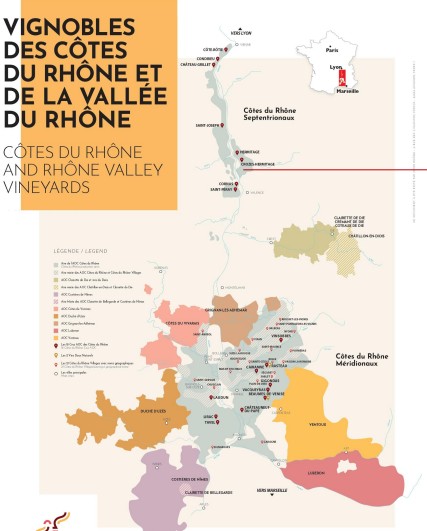
I am invited by the Crozes-Hermitage appellation’s interprofession, one of the eight appellations of the Northern Rhône, the homeland of the famous syrah, that majestic grape that has conquered both hemispheres.
On the program, three intense days of discoveries: several gourmet meals, a wine fair, a masterclass, and visits to vineyards. And lots of wines to taste, of course!
Crozes in Brief
Largest appellation of the Northern Rhône (over 2,000 hectares), right on the 45th parallel. Three grape varieties share the vineyards on hills and terraces: the syrah gives us the reds (89%) and the white duo marsanne and roussanne offers whites that generate definite enthusiasm among enthusiasts (11%).
Did you know…?
2/3 of the Crozes-Hermitage vineyards are certified organic!
The most enjoyable part of this humble professional that I am is tasting the wines in their respective vineyards, surrounded by the original vines. Brought by the mistral, the leaves of the syrah vines, in full awakening, sway under the radiant spring sun. And I smile, glass in hand.
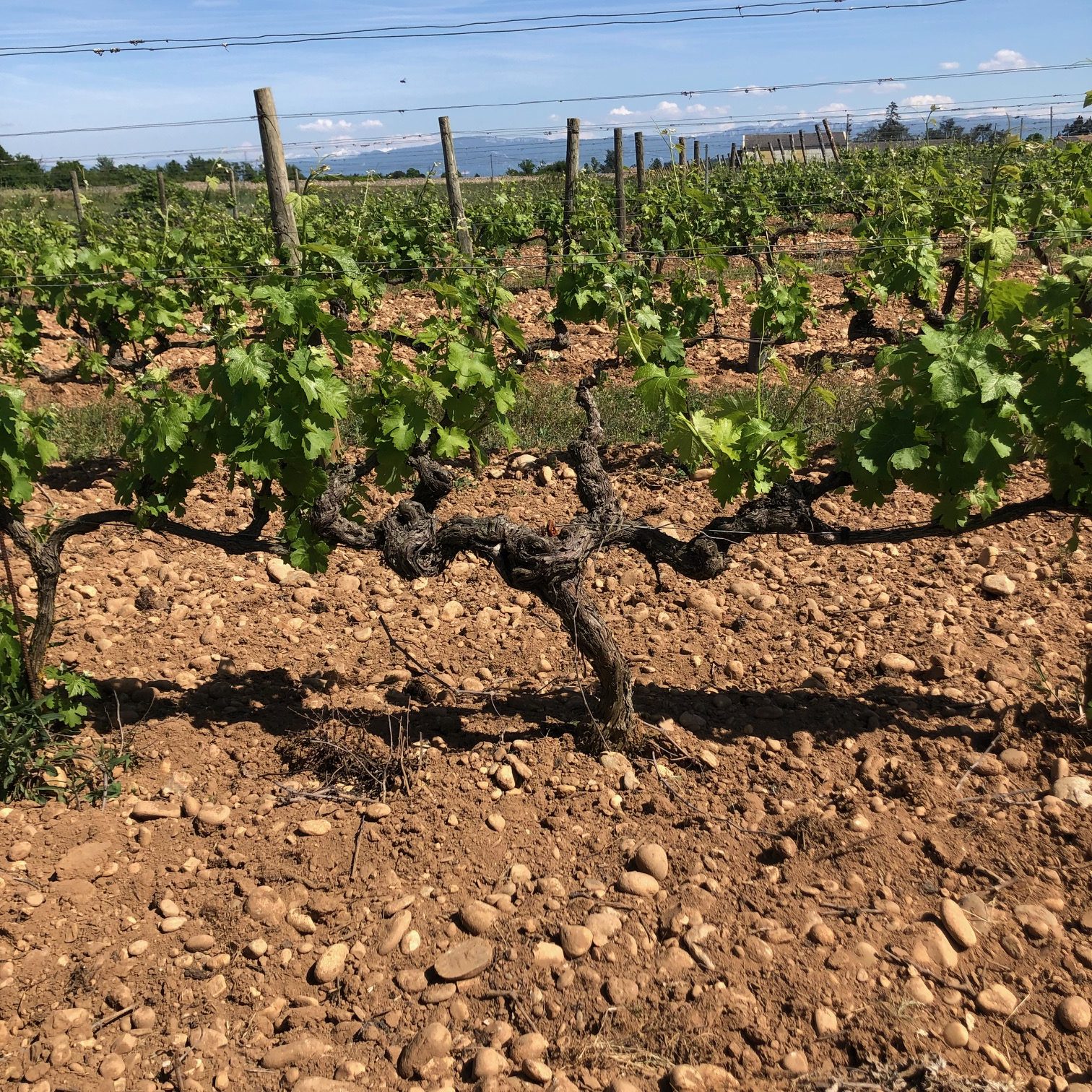
The southern part of the appellation is the rather explicit name of the “Plain des Chassis”, with its generally flat soil, essentially composed of rolled pebbles, a long expanse that coexists with orchards (apricots, cherries).
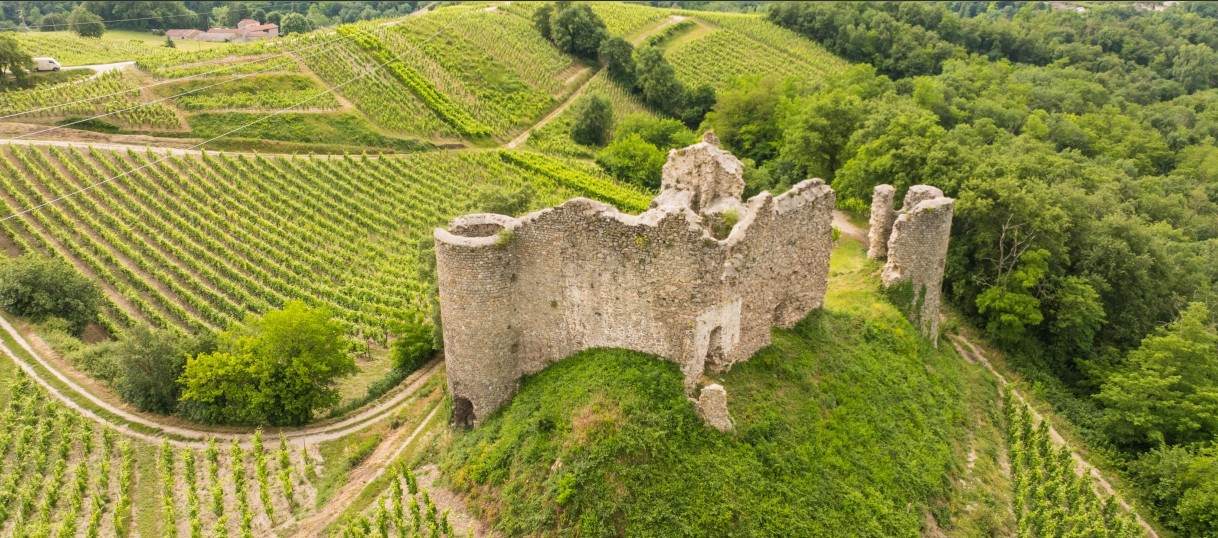
The Northern part is hilly, with its terraces, its low walls and its steep vineyards, where the vine is grown by the strength of the calves. Surprising and breathtaking, this part of the appellation offers wines that are more complex, with clay and granite soils, which give the palate a surprising structure.
Syrah
Aromas of prunes and blackberries, pepper, olives, complemented by notes of herbs and flowers (violet and rose).
Four Key Elements of This Visit That Will Make Me a Better Sommelier:
- The syrahs are fabulously modern and indulgent, supple and easy to digest, whereas my memories recalled wines that needed time to soften. The winemakers do not hesitate to blend delicate and precise aging, favouring patinated wood over barrels too vigorous. The cellars alternate between barrels, stainless or concrete tanks, eggs and demijohns. And the winemakers interviewed proudly explain the recipes of their aging and blends, alternating tanks, demi-muids and barrels aged a few years.
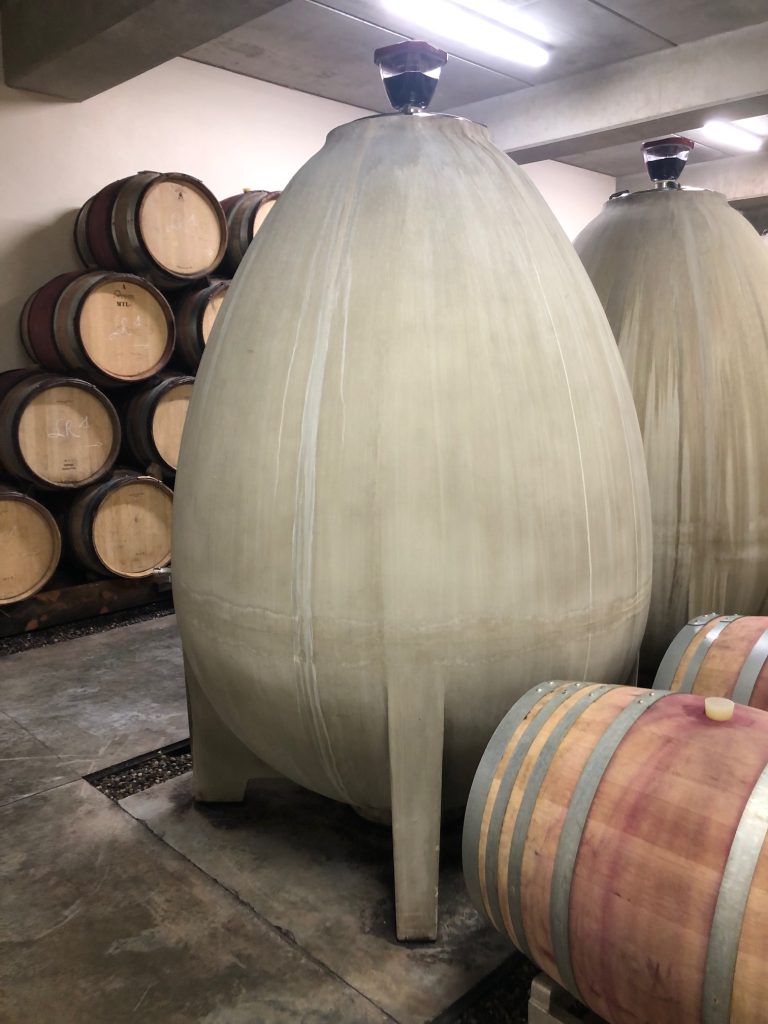
The Concrete Ggg
The egg-shaped form of these concrete tanks facilitates natural flow during fermentation and magnifies the fruitiness of the syrahs.
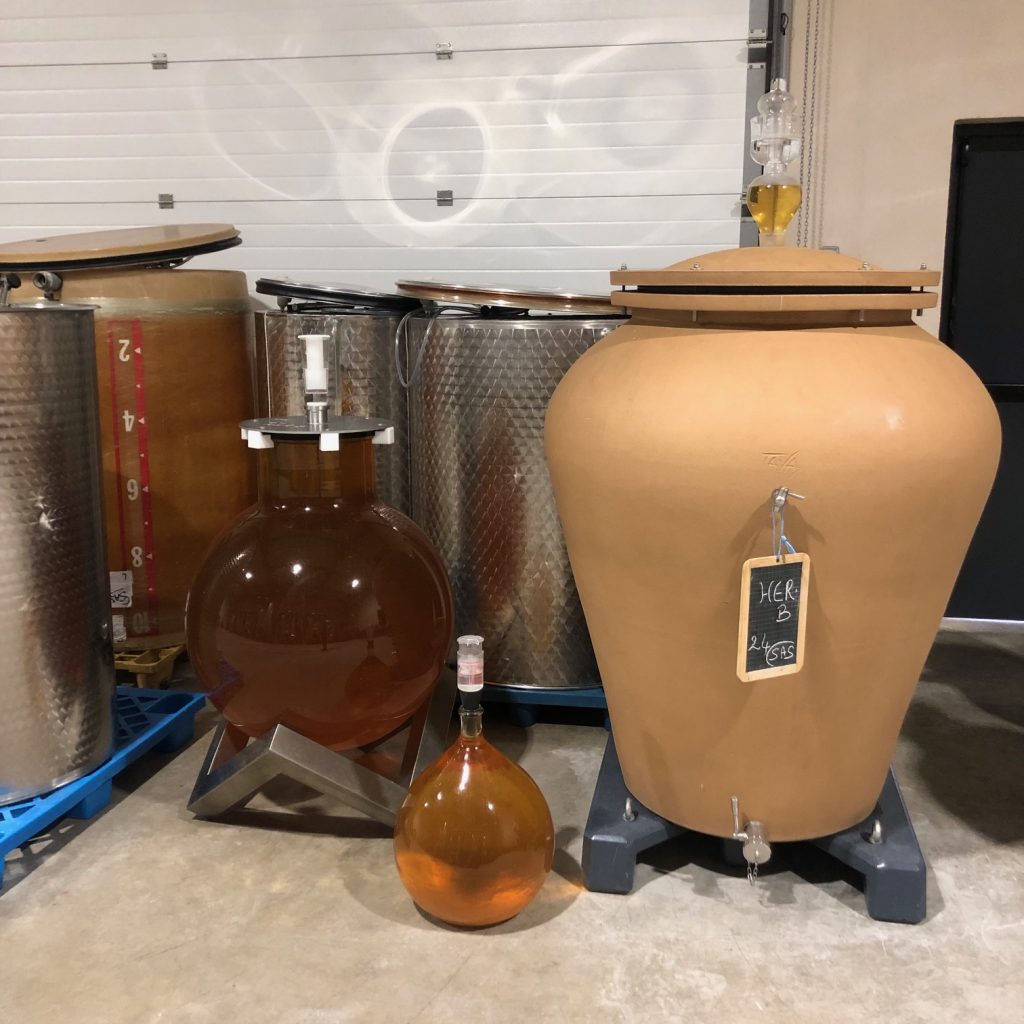
Demijohns
- The soils Crozes-Hermitage are varied and bring a lot of personality to the wines. I’d bet my life that, in the near future, the appellation will end up subclassifying its terroirs by village or by climate.
- Whites on the rise. The winemakers are unanimous: the Crozes whites will take a larger place in the coming years. From 11% today, they should represent much more in the years to come. The expressive duo of the marsanne and roussane grape varieties offers very beautiful discoveries, quite surprising, in blends as well as in single varietals.
- But above all, the most striking element remains the solidarity and enthusiasm of the winemakers we met. We taste and appreciate the neighbors’ wines. We speak with one voice of a living appellation, reflecting on the relevance of its terroirs and personalities.
Climate Change
The exceptionally brutal heat of 2003 is slowly but surely becoming an unavoidable reality in the winemakers’ reality. Yann Chave notes that, while 2003 caught the winemakers off guard, the same scorching conditions have since repeated for vintages 2018, 2019, 2020, 2022, 2023 and 2025. Harvests are earlier by at least 15 days on average. Water management thus becomes paramount, with original agricultural attempts using fascines and retention basins on the very steep slopes.
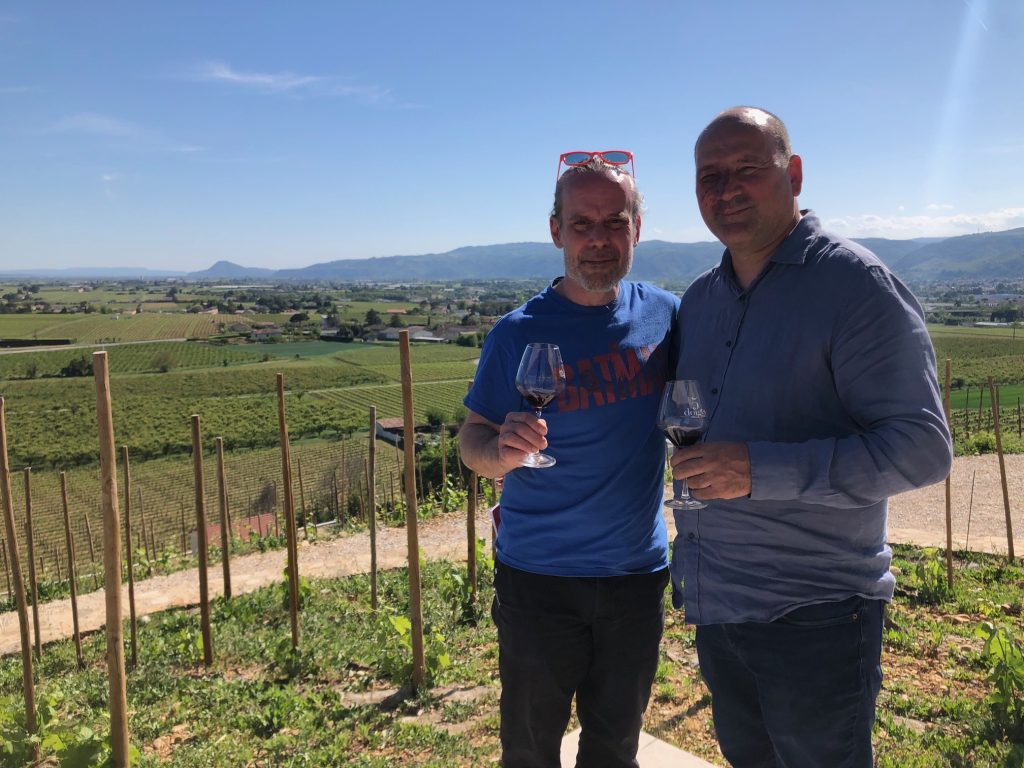
With my friend Yann Chave, on the terrace of Clos Madeleine, a crazy project that will be talked about in a decade.
However, the main innovation is in the cellar, replacing the more classic approach with delicate vinification; balancing acidity and fruit on equal footing, yielding more indulgent and digestible wines. We destem and moderate the wood’s contribution. We use the concrete egg.
A LOT of Tastings
Participating in a training trip with Karine Duplessis-Piché and Élyse Lambert imposes iron discipline. Rigour and concentration are implicit before every bottle that is presented to us, renewed opportunity to understand the grape, the winemaking, the vintage. This trip will have made me a better sommelier for sure. The saying goes that you should always be up to the level of what you have tasted… Or with whom you have tasted!
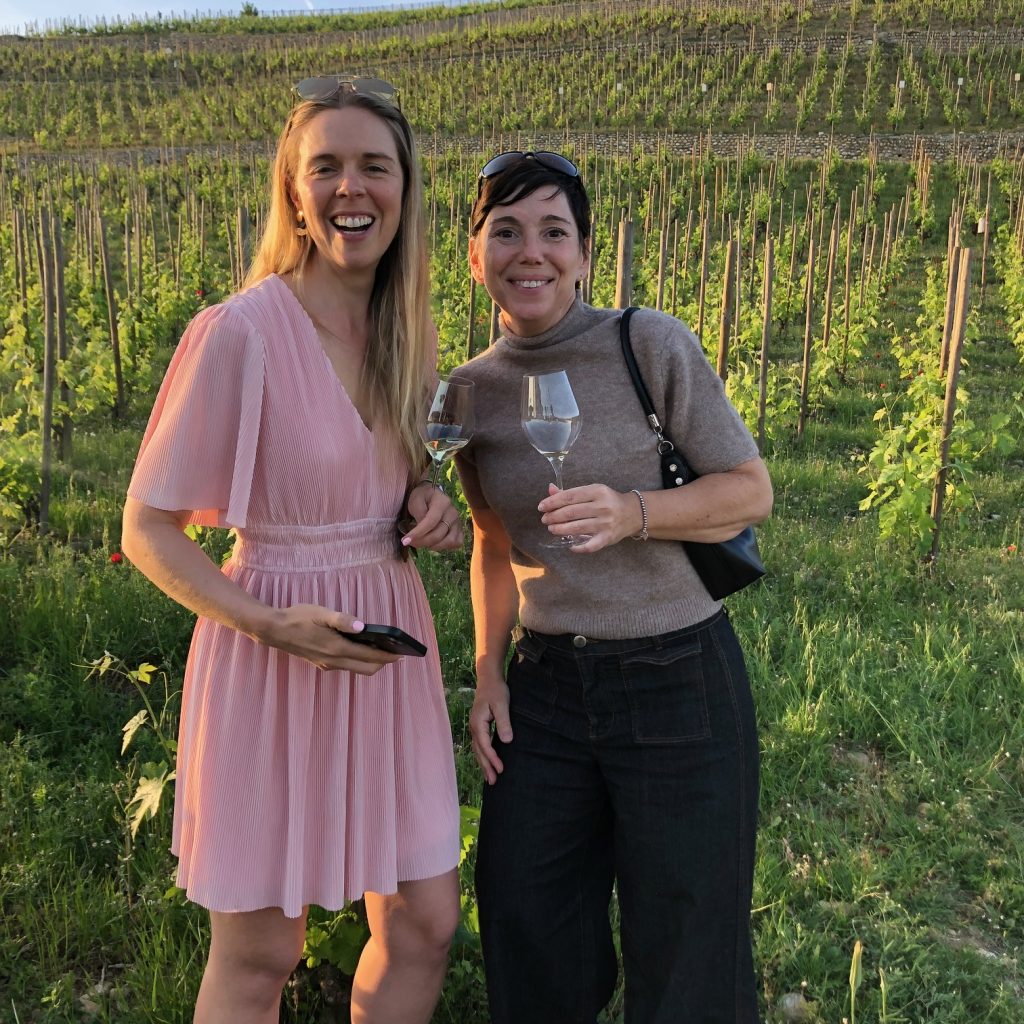
My longtime friends and colleagues: Karine Duplessis-Piché, journalist at La Presse, and Élyse Lambert, a highly talented sommelier.
What a fabulous getaway! A magnificently organized immersion by the Lyon-based agency Clair de Lune, here hired by the Crozes-Hermitage interprofession. The word that runs through my head to describe this too-brief experience: breathtaking! Thank you, life.